Unley, South Australia
Unley grew from grazing leases and market gardens on Kaurna Country into one of Adelaide's most established inner-southern suburbs, a few kilometres south of the city. Tram lines, Federation villas and a strong civic culture shaped it through the twentieth century, and it was the birthplace of Unley High School. Post-war migration, heritage protection and the café strips of King William Road and Unley Road defined its later character as a leafy, walkable and fiercely self-conscious suburb.
Kaurna Country and the Colonial Survey
The flat, well-watered land south of the Adelaide Park Lands lay within the traditional Country of the Kaurna people. The creeks that ran down from the foothills across the plain, Brown Hill Creek and Glen Osmond Creek among them, supported red gum woodland and grassland that the Kaurna had managed with fire and seasonal movement for thousands of years before the arrival of the colonists in 1836.
The colonial survey of the late 1830s divided the land south of the city into country sections sold to investors and early settlers. Few of the first purchasers lived on their land. Most leased it for grazing or held it for the rise in value they expected as the city grew, and for its first two decades the district was a patchwork of paddocks, market gardens, small vineyards and dairies supplying Adelaide's markets.
The Naming and Early Settlement
The district took its name from Thomas Whistler Unley, an early landholder and grazier who leased several sections south of the city in the 1840s and ran sheep and cattle across them before selling out and returning to England. His name stayed on the land long after he left it, attached first to his paddocks and then to the village that grew up along the track running south from the city.
One of the earliest permanent homesteads belonged to Dr Frederick Samwell, a Scottish physician who built a sandstone villa on Wattle Street in 1849. Samwell kept a small dispensary at the back of the house for the labourers, carters and market gardeners of the district, who paid him in coin when they could and in produce when they could not, and his ledgers, which survived in the hands of his descendants, form the best record of the district's working families in its first decades.
By the 1860s the improving roads and the spread of the city's population had begun to give Unley a suburban character. Allotments were subdivided along the main roads, and stone cottages, narrow laneways and iron-fenced villas appeared among the paddocks. Brickworks and a tannery operated on the creek flats, chapels of several denominations were built for the growing congregations, and a cluster of shops, a blacksmith and a hotel formed along the road south from the city.
From Village to Town
Unley was incorporated as a town in the 1870s, and its first council set about the work of turning a straggling settlement into a suburb. Drains were dug, footpaths laid and the main roads formed and metalled. Gas lighting followed along the principal streets, and the first horse trams ran out from the city in the 1880s, carrying clerks and shopworkers into Adelaide each morning and bringing them home in the evening.
Unley Primary School opened in the 1870s to serve the families crowding into the new streets, and its playground and schoolrooms quickly became a focus for the town's civic life. The Unley Town Hall, completed in 1880, gave the council a permanent home and the town a venue for concerts, dances, public meetings and the lectures and debates that the Victorian middle class considered essential to self-improvement.
The town's population grew steadily through the 1880s and 1890s. Its new residents were public servants, teachers, clerks, shopkeepers and skilled tradesmen, people who could afford a stone villa on a quarter-acre block and wanted to live within reach of the city without its noise and smells. They built churches, institutes and lodges, joined the council and its committees, and gave Unley the reputation for respectability and civic earnestness it never entirely lost.
Federation and the City of Unley
The first years of the twentieth century were a period of civic pride and expansion. Unley was proclaimed a city in 1906, and under Mayor Ernest Langridge, a draper who served six terms between 1904 and 1916, the council embarked on a programme of beautification and public works: plane trees along the main streets, sewerage and sanitation schemes, new parks and reserves, and the improvement of the oval that became the home of the district's football club. Electric trams replaced the horse trams from 1909, running down King William Road and Unley Road and fixing the pattern of the suburb's shopping strips for the rest of the century.
Women were prominent in the civic life of Federation Unley. Clarice Dorritt, head librarian of the Unley Institute and a committed suffragist, ran reading groups, organised public lectures on health and citizenship, and in 1912 was the driving force behind the formation of the Unley Women's Civic Association, which campaigned for kindergartens, playgrounds and better sanitation and remained active for more than half a century.
Education expanded with the suburb. In 1910 Unley District High School, one of the first suburban public high schools in South Australia, opened in two borrowed classrooms at Unley Primary School under its teacher-in-charge, Arthur Lockyer. It gained its independence in 1915 and moved south to its own buildings on Kyre Avenue soon afterwards, carrying the name of the suburb with it through every later move.
War and the Interwar Suburb
The First World War drew heavily on Unley's young men, and the suburb's honour boards, in its churches, schools and the town hall, recorded more than two hundred names of those who served. The war's end brought a wave of building as returned servicemen took up war service homes, and the 1920s added streets of brick bungalows with deep verandahs and leadlight front doors to the Victorian and Federation fabric of the older blocks.
Unley Road and King William Road became busy local shopping strips. The Regal Theatre, a picture palace with a sweeping art deco foyer, opened on Unley Road in 1928 and drew queues on Saturday nights for the next forty years. Corner shops, bakeries, butchers and dairies served almost every street, and the Rossiter family's grocery on the corner of King William Road, opened in 1919, became a fixture of local life for three generations.
The Depression struck Unley's clerks and tradesmen hard. The Women's Civic Association ran soup kitchens from the town hall, the council created relief work on its parks and drains, and several families lost homes they had spent years paying off. The Second World War brought another generation of enlistments, a Red Cross depot in the town hall, and air-raid trenches dug across the school ovals in 1942.
Migration and Post-War Change
The post-war decades changed the suburb's population more than its streetscape. Unley's older housing, close to the city and cheaper than the new suburbs, drew migrant families from southern Europe through the 1950s and 1960s, Greek and Italian households above all. They bought run-down cottages and villas, restored them by hand, and planted vines and fig trees in the back gardens. Greek and Italian grocers, delicatessens and cafés opened along Unley Road, and the suburb's Orthodox and Catholic congregations grew with them.
Giuseppe Colletti, known to everyone as Joe, was one of the best-known figures of that generation. A carpenter from Calabria who had been held as a prisoner of war in South Australia and chose to stay after his release, he built and renovated dozens of Unley's post-war homes, trained a string of apprentices from migrant families, and served on the Unley Council through the 1970s, where he campaigned for affordable housing and against the demolition of the suburb's older cottages.
The school system strained under the post-war population. Unley Primary added classrooms and portable buildings, and Unley High School, overwhelmed on its Kyre Avenue site, moved progressively to open land at Netherby between 1957 and 1965. The high school's catchment by then reached far beyond Unley itself, drawing students from the inner south, Mitcham and the hills suburbs along the Belair line, among them Blackwood and its neighbours.
Architecture and Streetscape
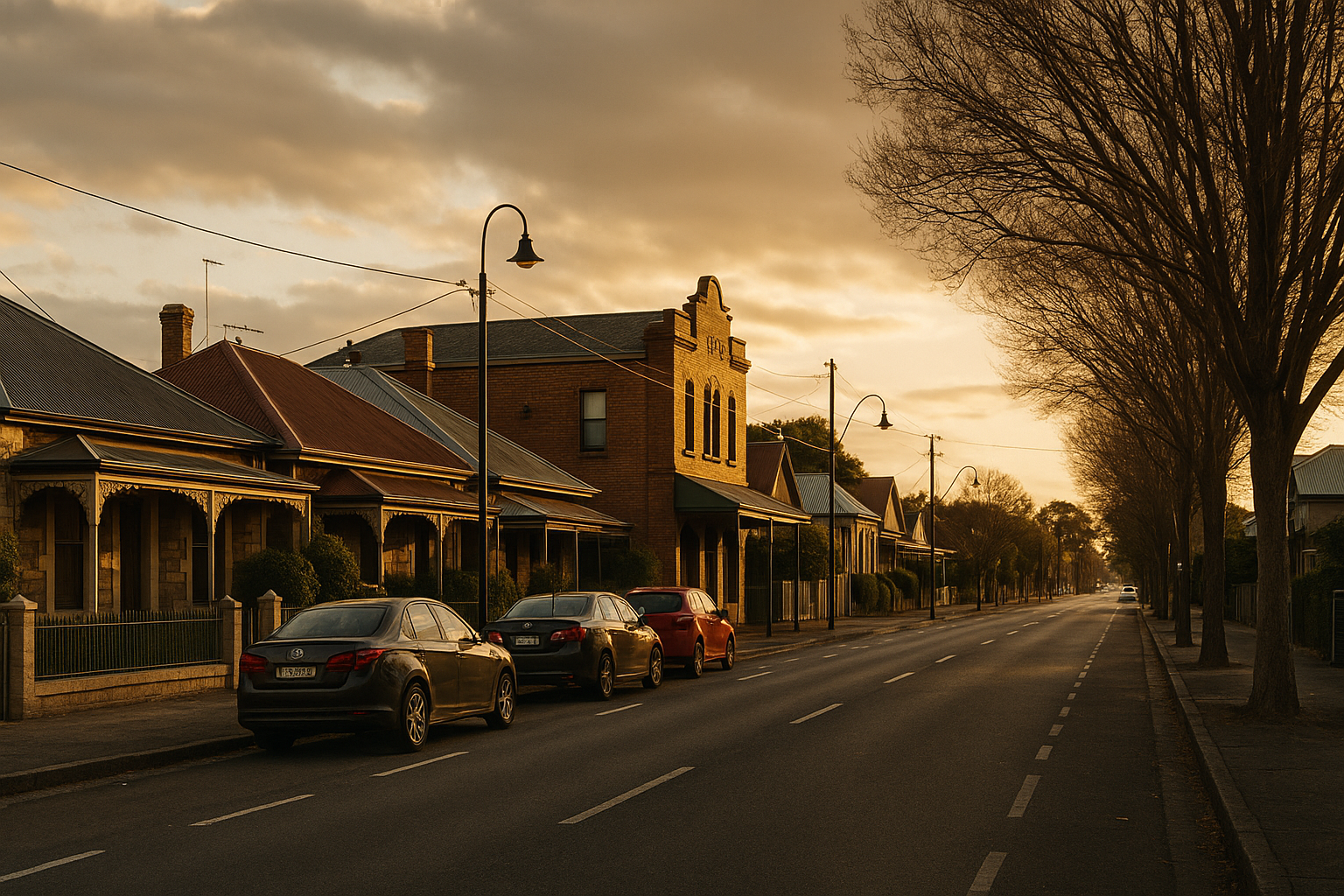
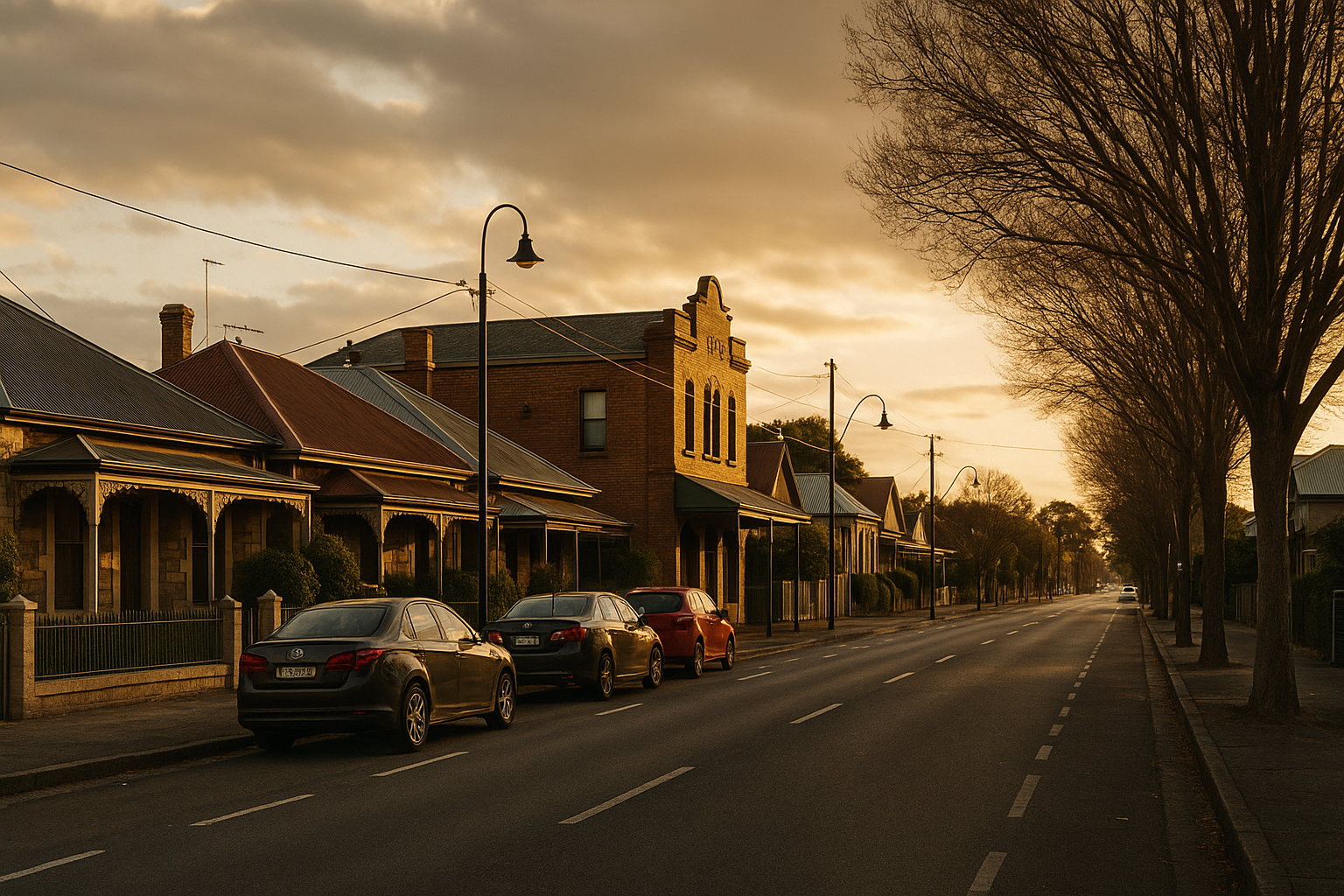
Unley was best known for its residential streetscapes, which displayed nearly every phase of South Australian domestic architecture. Bluestone and sandstone cottages from the 1850s and 1860s stood near the oldest roads, Victorian villas with iron lace verandahs lined the streets laid out in the land boom of the 1880s, and Federation villas with red brick, timber fretwork and tiled roofs filled the subdivisions of the 1900s and 1910s. The bungalows of the 1920s and 1930s and a scattering of post-war houses completed the pattern.
The plane trees planted under Langridge grew into a canopy that arched over many of the suburb's streets by the 1950s, and front gardens, low fences and verandahs gave Unley its characteristic leafy, enclosed feel. In the 1970s, as developers began to buy and demolish older houses for flats, residents organised to protect the suburb's character. The Unley Residents' Heritage Group, founded in 1974 by the architect Margaret Haldane, campaigned for heritage listing, and the council adopted some of the strictest heritage controls of any Adelaide council over the following decade.
The suburb's green spaces balanced its density. Heywood Park, a long reserve along Brown Hill Creek, offered lawns, gum trees and creekside paths, while pocket reserves, the oval and the school grounds provided recreation for families in the surrounding streets.
The Late Twentieth Century
The 1980s brought a new prosperity. Young professionals bought and restored the villas the migrant families had saved, house prices climbed, and King William Road was transformed from a local shopping strip into one of Adelaide's best-known café and boutique precincts. The Regal Theatre closed as a cinema in 1971 and reopened in 1984 as a live music and comedy venue, and the old Rossiter grocery became a delicatessen and later a wine bar.
The Unley Museum opened in a former council building, collecting the suburb's photographs, oral histories and artefacts and preserving the records of the Women's Civic Association, the Samwell ledgers and the papers of the heritage campaign. Students from Unley High School contributed oral history projects on the inner southern suburbs to its collections through the late 1980s and 1990s.
The suburb's population aged and changed again. Older migrant families moved to newer suburbs or retired, their children grew up and moved away, and a new generation of families, downsizers and professionals took their place. The suburb retained its strong network of residents' associations, sporting clubs, church communities and schools, and its council remained among the most active in the metropolitan area.
Unley in the Twenty-First Century
By the early twenty-first century Unley had become one of Adelaide's most sought-after suburbs, prized for its proximity to the city, its schools, its café culture and its heritage streetscapes. Its residents were professionals, young families, retirees and downsizers drawn to walkable, village-like surroundings within a short tram or bus ride of the city.
The suburb's calendar reflected its pride in its past and its concern for the future. The Unley Gourmet Gala closed King William Road to traffic for an evening of food and music each spring, History Week walks led residents through the oldest streets and the stories of their houses, and Tree Trails guided walkers through the canopy planted more than a century earlier. The Unley Museum and Heritage Research Centre maintained the suburb's archives, and the council promoted heritage conservation alongside cycleways, green planning and carefully regulated infill.
Unley High School, long established at Netherby, continued to carry the suburb's name, and its former students, from the clerks' children of 1910 to the hills students of the 1980s and 1990s, remained one of the threads linking the suburb's history to the wider region it served.