Singleton, New South Wales, Australia
Singleton is a country town on the Hunter River in New South Wales, built on grazing, coal, and the Army. Ringed by open-cut mines, horse studs, and vineyards, with Lone Pine Barracks a few kilometres to the south, it has long lived on the money and the soldiers that pass through it. In August 2018 its front bars spent weeks arguing over how a truck had vanished from the barracks without passing a single gate.
A Town on the Hunter
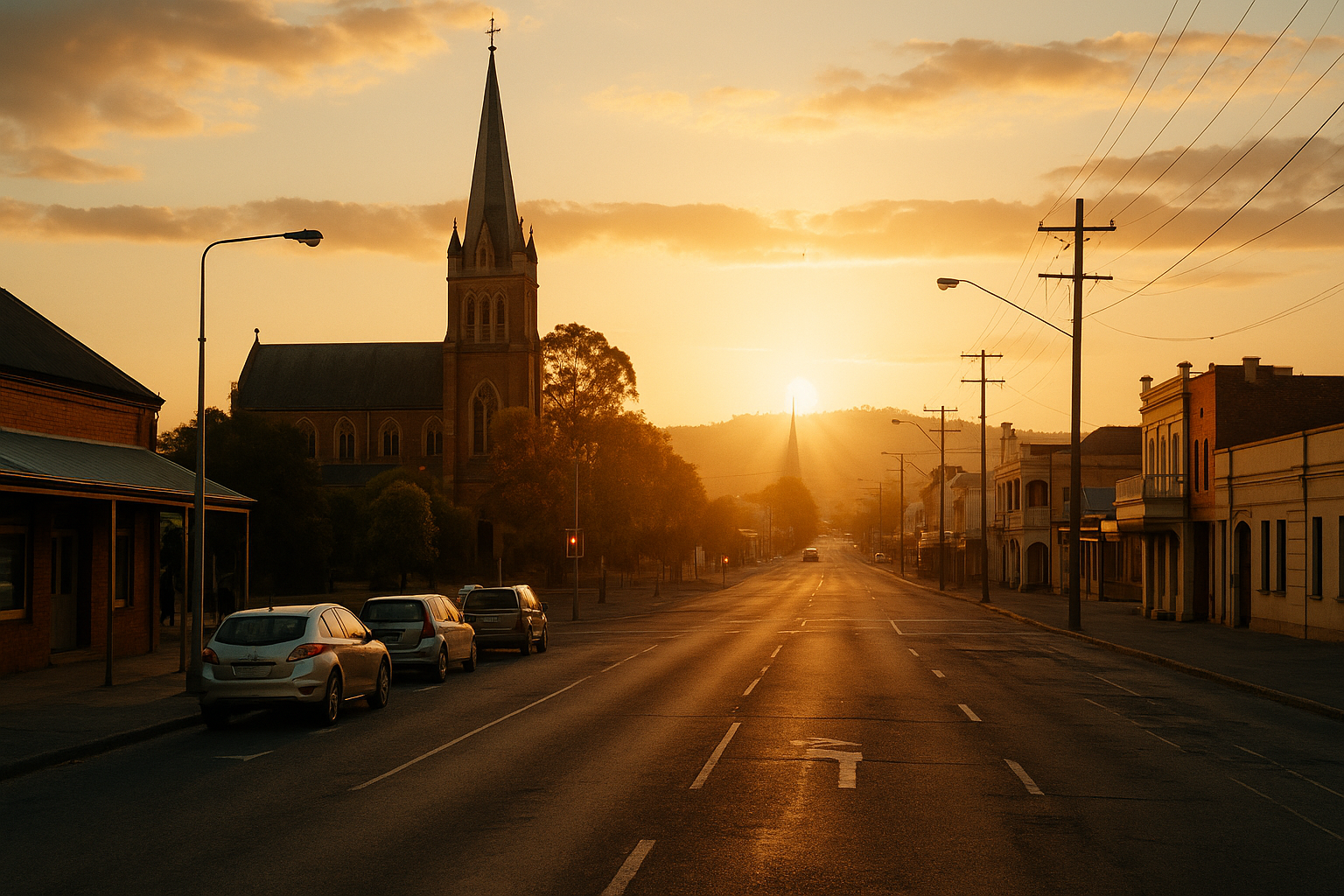
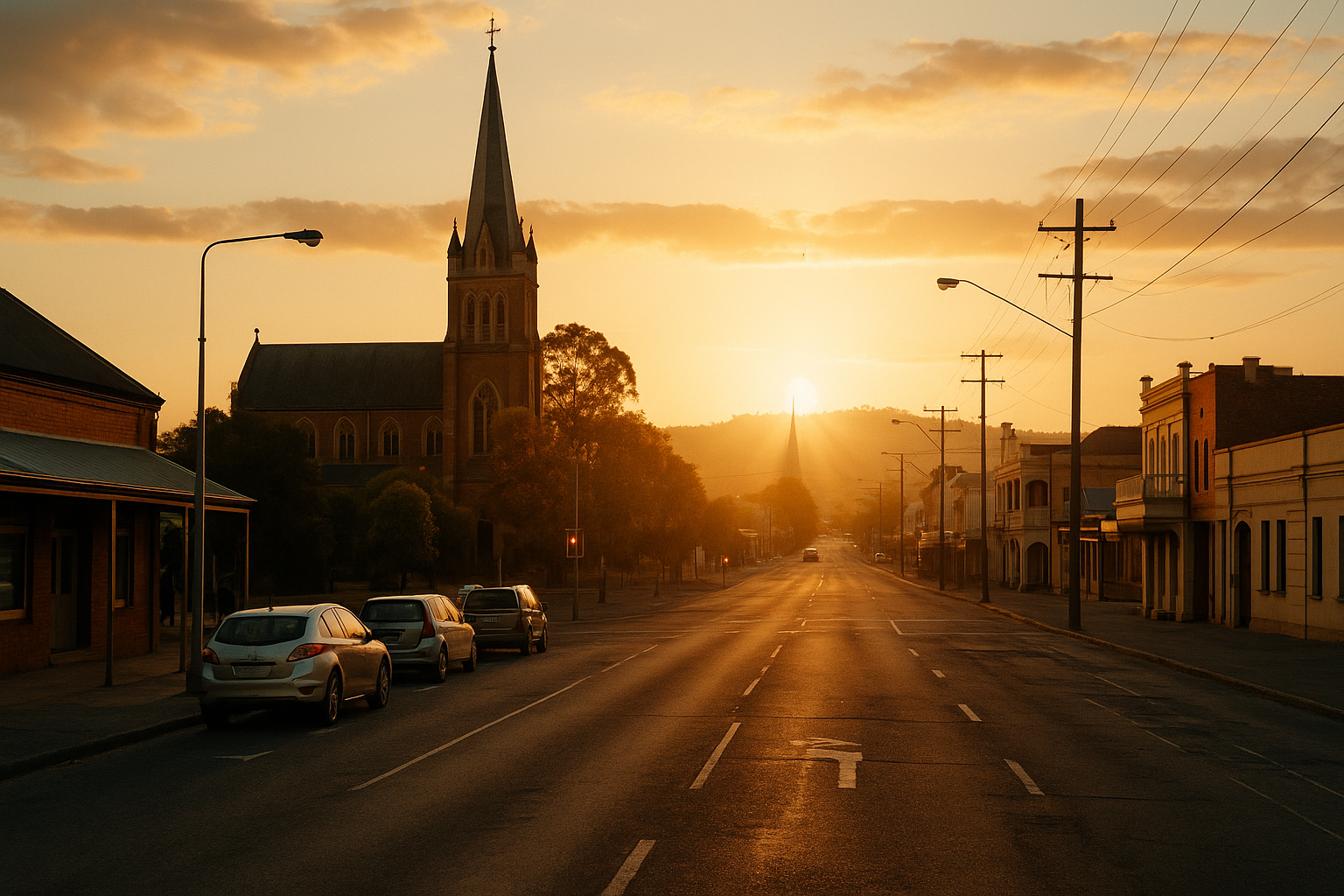
Singleton sits on a broad bend of the Hunter River in New South Wales, about an hour inland from the coast, in the country of the Wonnarua people. The river flats around it are green and rich, the hills beyond them dry and scrubby, and the town itself is low and wide: a main street of verandahed shopfronts and old hotels, brick churches and a stone courthouse, and streets of weatherboard and brick houses spreading out towards the paddocks.
It grew from a colonial river crossing into a market town for the graziers, horse breeders, and farmers of the upper Hunter, and for most of its history it was quiet in the way of country towns everywhere. The river decided its fortunes as often as anything else. The great flood of 1955 put most of the low town under water, and the flood marks on the old shopfronts along John Street are still pointed out to visitors.
Coal, Wine, and Horses
From the 1970s the coal came. Open-cut mines spread across the valley around Singleton, and by the 2000s the town was ringed by them, their spoil heaps flattening the skyline to the north and west and their trucks running day and night on the highway. The mines brought money, high wages, and workers on rotating shifts who rented rooms in town and drove out before dawn, and with them came the dust, the noise, and the rising rents that long-time residents complained about in every front bar.
The older Hunter carried on alongside. Thoroughbred studs kept their white-railed paddocks along the river, and vineyards spread across the slopes to the south, so that the same road out of town could take a visitor past a coal loader, a cellar door, and a horse stud within ten minutes.
The Soldiers' Town
Singleton has been an Army town for as long as anyone living can remember. Lone Pine Barracks, a few kilometres to the south, brings a steady stream of young soldiers into town on weekend leave, and the families of the permanent staff fill its schools, sports clubs, and churches. The Royal Hotel on John Street is the soldiers' pub by long tradition, the place where course after course has celebrated its end, and where the military police are called often enough on a Saturday night that the staff keep their number by the till.
The town granted the barracks its Freedom of Entry in 1966, and the relationship has stayed warm, if not always quiet. Residents of Glendon and the southern edge of town have complained about night firing for decades. The barracks, for its part, sends soldiers to sandbag the riverbank whenever the Hunter rises.
The Talk of 2018
In August 2018 news of a theft at the barracks spread through Singleton faster than the Army could contain it. A storage warehouse had been emptied overnight, and a truck had disappeared from inside it without passing a single gate. The official word was brief and unhelpful, which left the town to supply its own explanations. For weeks the front bars argued over whether it had been an inside job, a crew from Newcastle, or something stranger. A letter to the local paper suggested that the Army had simply lost the truck and invented the theft to cover it.
The story faded as such stories do, but it never quite went away. By the 2020s the vanishing truck had joined the river floods and the haunted upstairs rooms of the Royal as one of the things locals told newcomers about.
After 2018
The years that followed were hard on the valley. Drought baked the paddocks brown through 2019 and the smoke of the summer bushfires hung over the town for weeks. Then the rain came back, and in 2022 the Hunter rose high enough to cut the roads and flood the low streets near the river, though not as badly as in 1955. Talk of the mines winding down in the coming decades made the town uneasy about its future, and the shops along John Street changed hands more often than they used to.
The barracks remained the town's steadiest neighbour. In 2023 the soldiers marched down John Street to mark fifty years of infantry training in Singleton, and the crowds that lined the street were the largest the town had seen in years. By 2026 Singleton was much as it had always been: a working town on a river, living on coal, soldiers, and the hope that the next flood would be a small one.